Photo by Ralph Andrei Masangkay
A mini hackathon, a recap of OpenAI’s biggest announcements, and a room full of builders swapping notes. Here’s what happened at the community-led DevDay Exchange at the AWS office in Arthaland.
The event
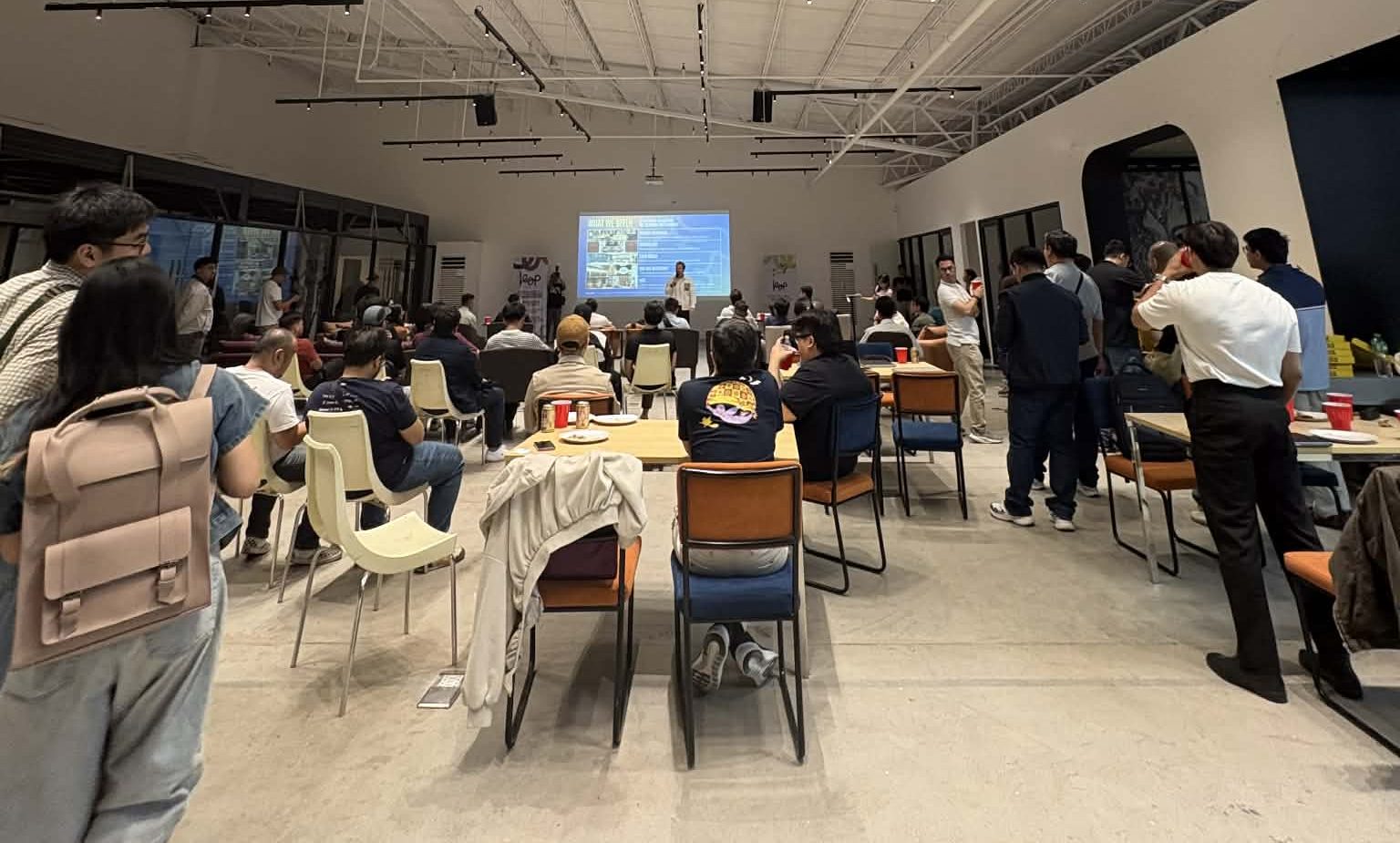
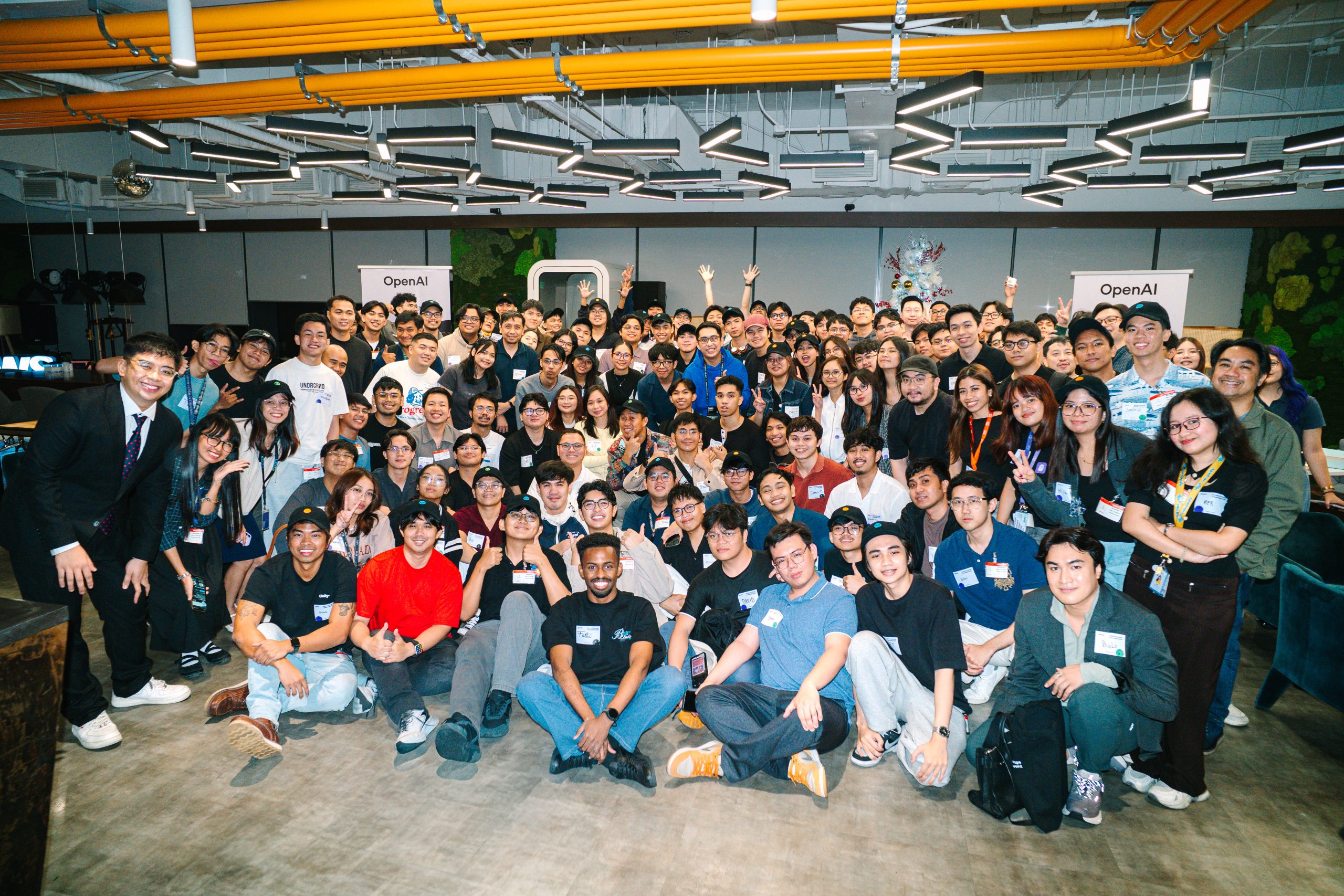
On Friday, November 6, builders from across Metro Manila gathered at the AWS office on the 15th floor of Arthaland Century Pacific Tower in BGC, for DevDay Exchange Community Manila. The goal was simple: catch up on everything OpenAI announced at DevDay 2026, meet other local builders, and share what they are making.
The event was hosted by David Marquez, CTO of Yield and the Codex Ambassador for Manila, and presented by Codex Community Events. The community-led event was supported by OpenAI, and attendees could take home Codex and API credits.
Funny or useful: the mini hackathon
The night started early. From 5:30 PM, arriving guests paired up with people they had just met, in teams of up to three. They had 45 to 60 minutes to build something in one of two tracks: something funny, or something useful done really well.
Teams recorded a short demo video and submitted it by QR code before the main program began. Demos, audience voting and awards came after dinner, with prizes in both tracks.
The funny track went to Desk Neighbor, an app that panics along with you as your deadlines approach. The useful track went to Open Chalk. Desk Neighbor’s maker, Clara de Guzman, tells its story below.
DevDay 2026, unpacked
At 6:30 PM, David opened the main program with a recap of DevDay 2026, which he attended in San Francisco. The highlights:
- GPT-6.1 Sol: near-Astra intelligence at one-fifth of Astra’s token prices, available in Work, Codex and the API.
- GPT-6 Astra Ultrafast: up to 8x faster token generation in Codex and up to 6x in the API.
- Dots: always-on agents that learn what matters to you and keep working on your behalf.
- Codex: Codex in the cloud, a refreshed Codex CLI with voice and /agents, Code Review, and Codex Security Cloud.
- For developers: the Agents API with computer use (public beta), the Decisions API (limited preview), and Bedrock Managed Agents, which runs OpenAI agents on AWS. That last one was a fitting note for a night at the AWS office.
- For teams: ChatGPT Space, Pages, collaborative slides, plugin extensions, Sign in with ChatGPT, and Pro 500, a new $500-a-month tier.
After dinner and roundtable discussions came show and tell, the hackathon vote and a group photo. A “Dotties” menu, with flavors like Ube Overload and Mango Dream, nodded to the night’s biggest announcement. After the program, there was an optional after-event at George and Onnie’s in World Plaza, near Arthaland.
In their words
We also got to interview some of the coolest tech people who attended the event, plus the organizer himself, David. Here’s what brought them there and what they took home.
Different backgrounds, one vision
The people in the room came from very different places: a student, a game developer, a data engineer, a product designer, a cloud security veteran, and a software engineer from Japan. Yet when asked why they came, they gave almost the same answer. They wanted a community where people learn from each other, build together and lift each other up.
Tomonori “Tom” Takanawa, a software engineer from Japan, didn’t find the event through a poster or a group chat. He asked his dots, ChatGPT’s new always-on agents. “I asked my dots if there was an interesting tech event in the Philippines,” he said. What he hoped to find there was simple: “Before joining this event, I wanted to have tech friends.”
Mark Christian Calugay, who builds apps, tools and mostly games, came to find like-minded people. “I have my own stuff that I’m working on, but it’d be nice to see how other people are optimizing their workflows,” he said.
France Khalil, a data engineer at Healthy Options, called himself “an avid fan of these community events.” He came to learn how orchestration works with Codex, and to meet people with similar interests.
Alexi Canamo, a third-year Computer Science student at Ateneo who does AI engineering at Casper Studios, came for the new technology. He is moving his own work over to Codex. Beyond his internal work at Casper, he keeps several side projects going at home. “I work on student tools that help the community in Ateneo,” he said.
Macky Matsunaga, a cloud security practitioner who has been part of the IT community for about 18 years, put the common thread most plainly. “No man is an island. Collaboration is the key to success in any domain of IT,” he said. He came “to learn from each other’s experience, and to inspire and to empower.”
Adrian Abelarde, who is building Clucky while working full-time for a UAE-based company, was the most honest. Asked what brought him, he laughed: “OpenAI credits.” Then he added the rest. He wanted to network, have fun and eat good food.
Building Desk Neighbor
The funny track’s winning build came from Clarisse Helaine “Clara” de Guzman, a product designer at Australian-based development agency Appetiser Apps. It was built for laughs, but it turned out to be useful too.
“It’s called Desk Neighbor,” she said. “It panics with you as your deadline approaches.”
The app counts down to each deadline. You can snooze one that’s already due, but it keeps panicking with you until it’s done. Clara built it around her own workday. “There’s a lot of deadlines during work. It’s hard to keep track of what to focus on during the day,” she said. “So having that added pressure really helped.”
The hardest part, she said, was the idea, not the code. The market is already crowded with focus and productivity apps. “I believe there’s really no original concept anymore. It’s more of how you utilize what you see and what you actually experience.”
Once the idea was clear, building it with her AI tool was a quick back and forth. “If you know what you’re going to build and what your goal is, it’s going to be easier now, in the age of AI, to actually implement it,” she said. It was her first hackathon, and her first tech event.
What stood out from DevDay
For France, Dots was the big news. “This is the first time I’ve heard of it. I’ve heard of competitors, but this is the first time,” he said. “It got me interested in testing that out.”
Adrian cared less about the new models. His takeaways were ChatGPT Space and Sign in with ChatGPT. “There’s a lot of use cases, especially for companies. You can just use your existing subscription,” he said.
On models, he was relaxed. “I’m not waiting for any other models right now. I’m good with GPT-6.1,” he said. “It’s enough for me to be able to do my stuff.”
Why David does it: pay it forward
The organizer shares that vision too. For David “Davo” Marquez, the room itself is the point.
“I love gathering people,” he said, as attendees talked over dinner. “Right now I can see everybody just networking, talking about how they’re using AI or other things that they’re building. I feel like we need more spaces like that.”
He thanked OpenAI for sponsoring the budget, but said this is something he would do on his own anyway. His goal is to show people what’s possible. “You could be more productive, you could do more work, do better, and you could be more ambitious because of all of the things that OpenAI is releasing,” he said. Slides only go so far, he added. People also need to learn from their peers.
He hopes attendees will start spaces of their own. “Nothing stopped me from doing that. So go,” he said. “You’re going to help each other by creating these spaces, and you never know who benefits from this.”
He remembered a participant from one of his past hackathons. “He said, ‘Sir, I took your credits, launched a product, and made $400 from those credits.’ Those are the reasons why I do this,” David said. “I hope other people get to do this and pay it forward as well.”
Advice for the next wave of builders
Asked what they would tell students and young people in tech, they once again said almost the same thing: build, and let people see it.
“Just keep shipping,” Adrian said. “People worry about shipping stuff, because others might judge what they ship. Put it out on the internet, really. Who knows what could happen.” He has been posting his work on X “even with zero audience, zero viewers.” When he launched Keeby to the public, it got attraction and built his personal brand.
Alexi agreed. “Build in public. Show off what you’re doing to the world so you can get feedback,” he said. “That’s really important to employers as well. If they can see what you’re actually building, they’ll be the ones to reach out to you.”
Clara learned it this year. When she started exploring AI tools, the results felt “all slop, all generic stuff” at first. Building is what changed that. Tutorials help, she said, “but it’s not really going to help that much aside from you actually experiencing it.”
Macky has 18 years of experience behind his advice. “Learn to create, build, and destroy,” he said. Get hands-on, do projects, build a portfolio and understand how the system works. With generative AI, he added, you don’t need deep expertise to start. What matters is understanding the fundamentals, knowing how the system works, and building applications that are sustainable and benefit the community.
It doesn’t stop here
Tom came looking for tech friends. Clara came to her first tech event. Macky came after 18 years in IT. They all left with the same idea David hopes they will spread.
“I hope this doesn’t stop here,” he said. “I hope you guys get to share this wherever you go. I hope they can start their own things as well.”
About the Author: Rodmina Ibe