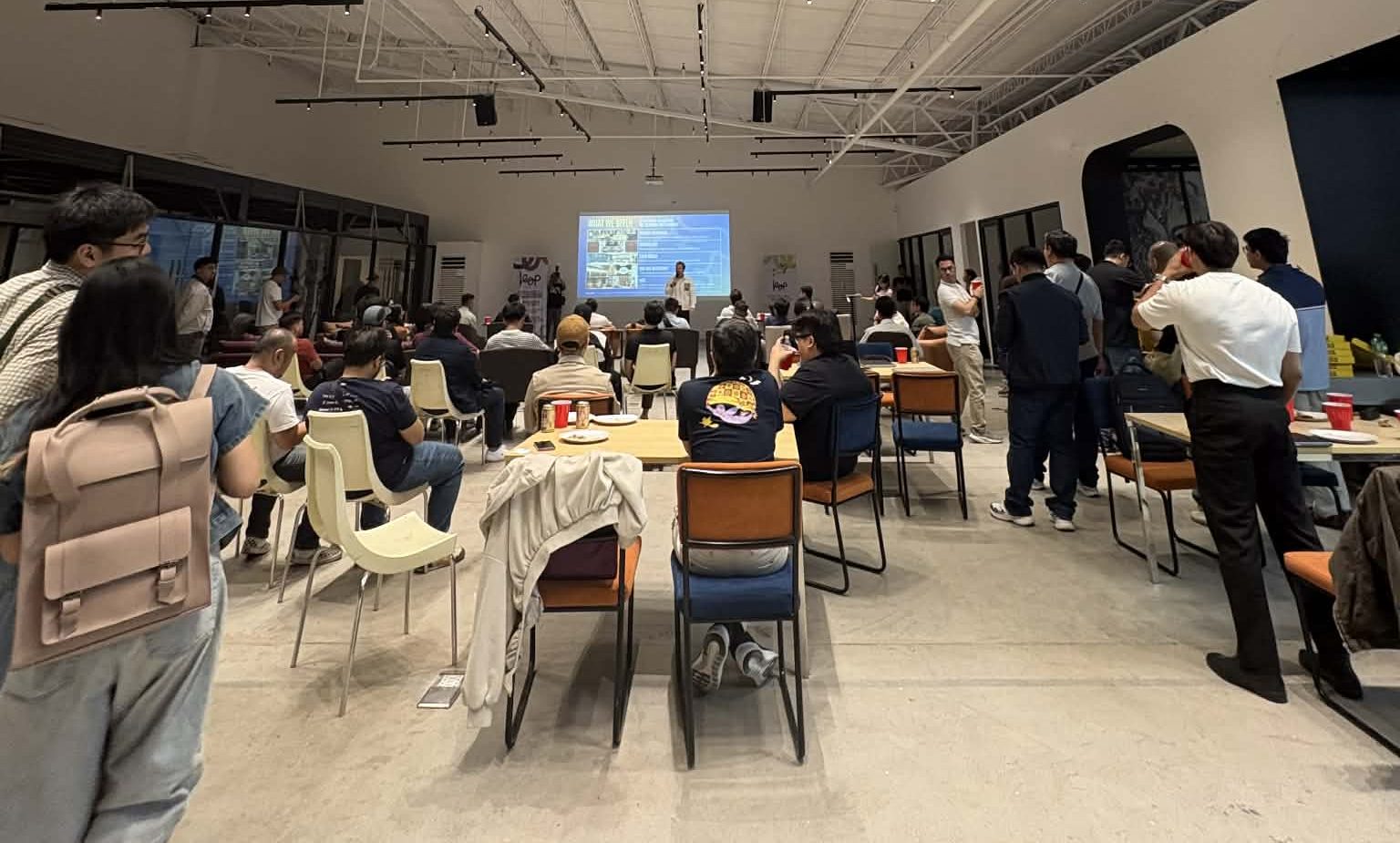
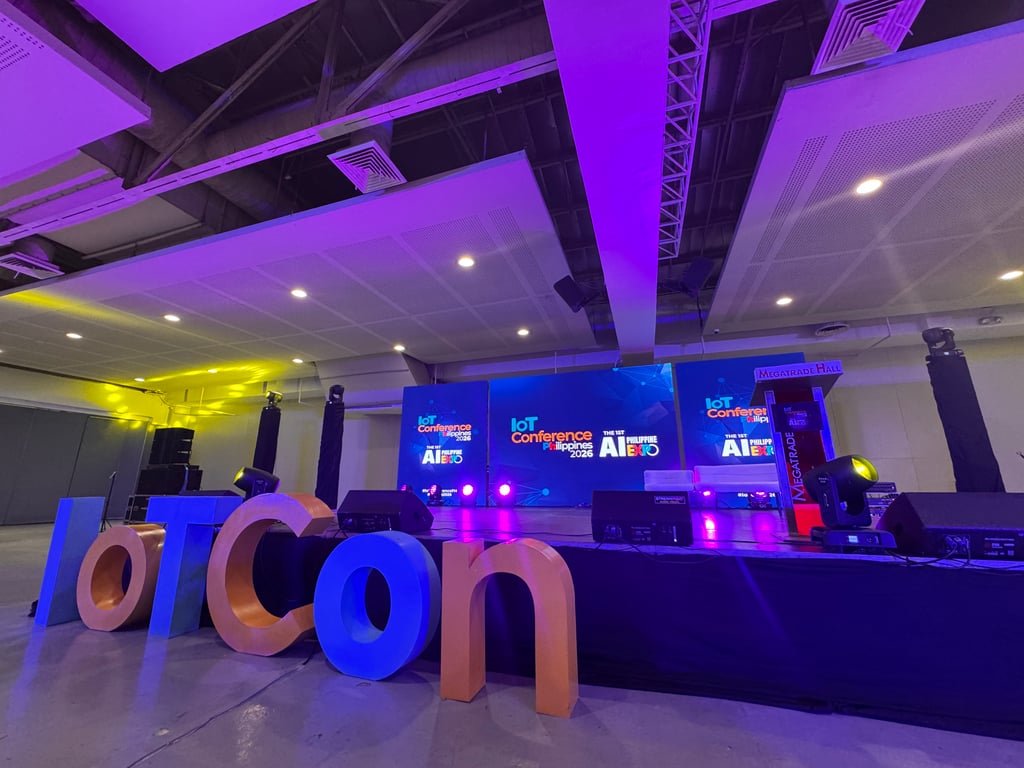
The 4th IoT Conference Philippines (IoTConPh) 2026 and the 1st AI Philippine Expo closed on November 11 at the Megatrade Halls of SM Megamall. Over two days, government leaders, industry experts, educators, and innovators explored how artificial intelligence (AI) and the Internet of Things (IoT) can serve Filipino businesses, communities, and workers. Mary Joy C. Olmstead, Founder and Director of YBO IT Solutions, moderated two Day 2 panels on digital governance and on the future of marketing and creativity.
MANDALUYONG CITY, Philippines — November 12, 2026 — The 4th IoT Conference Philippines (IoTConPh) 2026, co-located with the 1st AI Philippine Expo, closed on November 11 at the Megatrade Halls of SM Megamall after two days of keynotes, panel discussions, workshops, and a hackathon. Organized by Packetworx, Inc. and Redwizard Events, the event brought together national and local government leaders, technology companies, academics, and startup founders around one shared message: the Philippines must build its AI future together, or risk being left behind.
Among those taking part was Mary Joy C. Olmstead, Founder and Director of Your Back Office IT Solutions (YBO IT Solutions), who co-hosted the expo’s second day and moderated two of its panel discussions: one on digital governance and disaster resilience, and one on the future of marketing and creativity. Day 2 focused on a theme that grows more urgent as AI becomes part of everyday life: building intelligence with responsibility.

Two Days, One Direction
Day 1 laid the groundwork, moving from connectivity to business impact. Speakers from the International Telecommunication Union, the Department of Science and Technology – Advanced Science and Technology Institute (DOST-ASTI), LoRa Alliance, and Supermicro discussed the digital foundations of an AI- and IoT-driven Asia-Pacific. Panels then showed how connected intelligence improves operations, customer experiences, and decision-making, before a closing look at robotics and a vibe-coding hackathon, the Build Off.
Day 2 carried the conversation from what technology can do to what it should do, and for whom.
A national vision for a connected Philippines. Jerry Ilao, President of the Philippine AI Business Association, opened the day by stressing that the intelligent enterprise must rest on responsibility and collaboration. Introduced by Jojo Marasigan, Chief Commercial Officer and Head of Strategic Partnerships of Packetworx, Department of Information and Communications Technology (DICT) Secretary Robert Joseph “Jay” Montes de Claro delivered the Guest of Honor keynote, “Building a Connected Philippines: The Role of IoT in National Digital Transformation.” The session framed connectivity not by the networks built, but by what they make possible for people: a farmer protecting a harvest, a town warned of a flood, a remote family reaching essential services.
Technology for public good. In a recorded keynote, Naga City Mayor Maria Leonor Gerona Robredo explored “Technology for Public Good: Smarter Governance, Safer Communities.” The segment highlighted the MyNaga App, which lets residents access city services, receive updates, and report concerns, and the 1st My Naga Mayoral Hackathon, which brings local government and the tech community together to solve priority needs in health, social services, and the environment.
Work, ethics, and trust. Dominic “Doc” Ligot of CirroLytix examined how AI is shifting work from execution to orchestration. He then joined Responsible AI Consultant Danielle Dalisay and strategic risk specialist Ralph Romulus Arias Frondoza for a fireside chat, “Ethical AI and IoT: Building Trust in Intelligent Cities and Digital Enterprises.” The discussion asked whether the country is prepared ethically, socially, and institutionally, not just technologically, to live and work alongside AI. Michael Tagle of Globe Business followed with a practical reminder: without proper orchestration, thousands of connected devices are just expensive hardware.
Government that responds. Olmstead moderated the afternoon panel “Reimagining Governance Through Digital Innovation,” which connected three levels of public service. Department of Public Works and Highways (DPWH) Assistant Secretary Angelo G. Nuestro discussed the DPWH Transparency Portal and IoT-enabled bridge monitoring as a program being explored. Infanta, Quezon Mayor Lord Arnel “L.A.” Ruanto presented “From Data to Action: Building Disaster-Resilient Communities Through Smart Local Governance,” sharing how IoT-enabled automated weather stations, implemented with Packetworx, support disaster preparedness. RJ Bandola of the Naga City Mayor’s Office then walked through how MyNaga turns citizen reports into action.
People at the center. The “Future-Ready Workforce” panel, with Gina Romero of Mettamatch and Connected Women, Jokes Romero-Wolf of UnionBank of the Philippines, and Fatima Ramos of Personal Collection Direct Selling Inc., tackled reskilling, inclusion, and the human skills that grow more valuable as automation advances.
Creativity in the age of AI. Olmstead also moderated “Surviving and Thriving in the Age of AI: The Future of Marketing and Creativity.” Pauline Bernal Oderon, National President of the Multimedia Arts Council of the Philippines; Fleire Castro, founder of Dasho and Third Team; and Joie Cruz, founder of Limitless Lab, discussed how creatives and brands can stay original, discoverable, and human-centered when anyone can generate content in seconds. The panel also looked at a new frontier for brands: how they are represented when customers ask AI tools for recommendations.
Secure and sustainable enterprises. The day closed with “Future-Ready Enterprises: Security, Sustainability, and Emerging Technologies.” RB Bañez of MariBank Philippines spoke on AI governance, CLIXLogic founder Charlie Fernando on energy efficiency and environmental, social, and governance (ESG) goals, and Carmelo R. Alcala of the Institute of Corporate Directors on security and privacy in connected devices. Their shared challenge for small and medium-sized enterprises (SMEs): choose one priority, start there, and build trust as you grow.
Parallel workshops on AI for Marketers and AI for Educators gave participants hands-on starting points to take back to their own work.
Why It Matters for the Philippines
Across both days, one theme kept returning: no single sector can carry the country into the AI era alone. Government builds the digital foundations and sets the rules of trust. Industry brings the tools and the investment, while educators, creatives, and workers learn to use them well.
As countries across the Asia-Pacific region race to build AI capability, the expo showed that the Philippines already has the pieces: local governments using real-time data, companies deploying IoT at scale, and a growing community of responsible AI advocates. The task now is to connect them.
“Moderating the governance and marketing panels, I saw the same lesson from two very different angles,” said Olmstead. “Whether it is a mayor preparing communities for a storm or a designer finding their voice beside AI tools, technology only creates value when people know how to act on it. Our leaders in government, our technology companies, our schools, and our communities each hold part of the answer. If we keep supporting one another, the Philippines will not just keep up in the AI era. We can help shape it.”
She added that the message is especially relevant to the micro, small, and medium enterprises (MSMEs) that make up much of the Philippine economy. “Many small businesses feel they have to adopt everything at once or be left behind. The speakers showed a better path: start with one real problem, use your data well, keep security and your people in mind, and grow from there.”
About the Author: Charlene VRITIMES