“How the Philippines is Building a Unified AI Future with DOST-ASTI’s National AI Center”
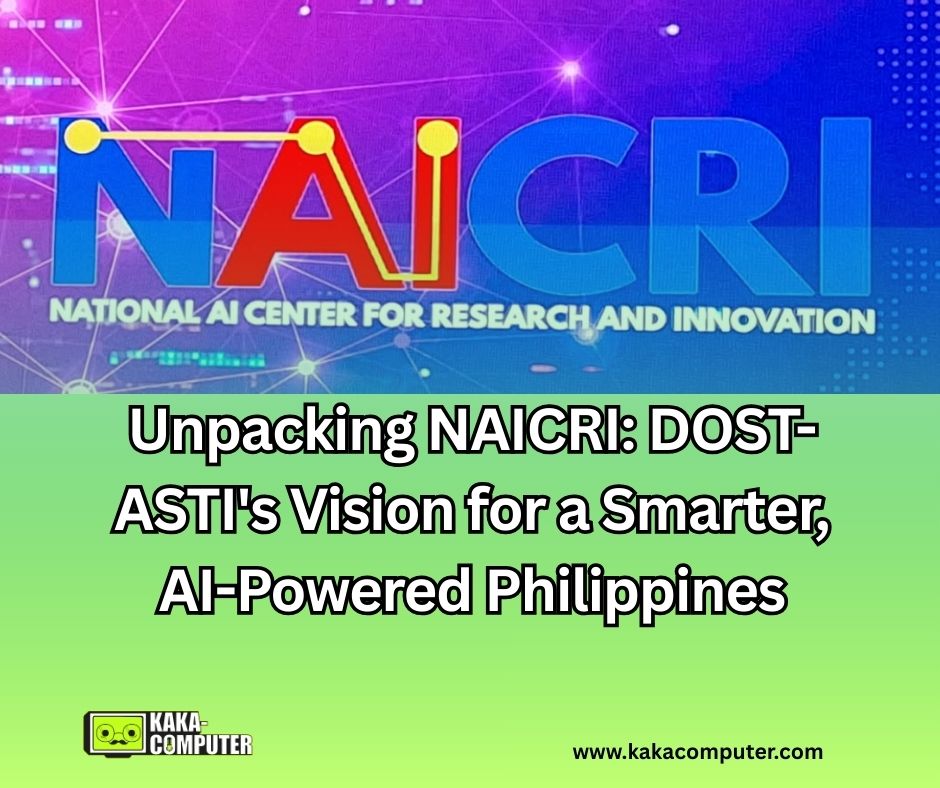
26 February 2026 – Manila Hotel – Launch of the National Artificial Intelligence Center for Research and Innovation. The Philippines is making a significant leap in its technological journey with the launch of the National Artificial Intelligence Center for Research and Innovation (NAICRI) by the Department of Science and Technology – Advanced Science and Technology Institute (DOST-ASTI). This center is designed to be the country’s main hub for AI research, advanced computing, and innovation. For too long, the national AI scene has faced challenges like scattered infrastructure, limited data, and difficulty turning research into real-world solutions. NAICRI aims to fix this by creating a lasting institution that coordinates and grows AI capabilities beyond short-term projects.
Instead of reinventing the wheel, NAICRI is built upon existing strengths within the DOST system and its partners. Its goal is to transform these individual efforts into shared, scalable national assets. Imagine AI as a crucial piece of national infrastructure, much like roads or power grids. NAICRI envisions AI supporting everything from modernizing government services and boosting research excellence to making industries more competitive and ensuring tech benefits everyone, not just a few. This strategic approach provides continuity for AI development, regardless of changes in political leadership.
NAICRI will serve three key roles. First, it acts as a research coordinator and governance layer, setting national AI research priorities and fostering partnerships across government, universities, and industries. Second, it provides an infrastructure backbone, offering shared computing power, storage, networking, and MLOps (Machine Learning Operations) tools that support approved national programs. Finally, it functions as a platform and services hub, operating AI platforms, data systems, and ready-to-use AI templates that various agencies and partners can adopt for sectors like health, disaster management, agriculture, and traffic control.
Several exciting projects are already underway or being integrated into NAICRI’s framework. For instance, the AI-Powered Weather Forecasting for a Resilient Philippines (AI4RP), also known as Project Gabay, is a collaboration with DOST-PAGASA and U.S.-based Atmo Inc. This system delivers highly detailed, neighborhood-level weather forecasts, improving disaster preparedness, agricultural planning, and renewable energy optimization. Another crucial initiative is iTANONG, a homegrown AI solution from DOST-ASTI that allows Filipinos to access databases and documents using natural language, including English, Tagalog, and Taglish, making information more accessible without needing technical coding skills.
Addressing urban challenges, the Vision-Based Adaptive Intelligent Traffic Control with Artificial Intelligence (vBANT.AI) component is developing smart traffic monitoring tailored for Philippine cities. This system uses computer vision and AI to detect and classify local vehicle types like jeepneys, tricycles, and motorcycles, which international models often miss. This offers a non-invasive, scalable solution for improving traffic management in Metro Manila and beyond. Additionally, the Mus3o project showcases AI’s role in preserving culture by using computer vision and 3D reconstruction to create high-precision digital copies of national cultural and natural artifacts, making heritage accessible for future generations.
These initiatives, alongside foundational projects like the Computing and Archiving Research Environment (COARE) for high-performance computing and the Philippine Research, Education, and Government Information Network (PREGINET) for high-speed research connectivity, highlight NAICRI’s commitment. By centralizing efforts and providing robust infrastructure, DOST-ASTI’s NAICRI is not just building technology; it’s building a future where AI empowers various sectors, from disaster resilience and agriculture to cultural preservation, directly benefiting the Filipino people and driving national development.