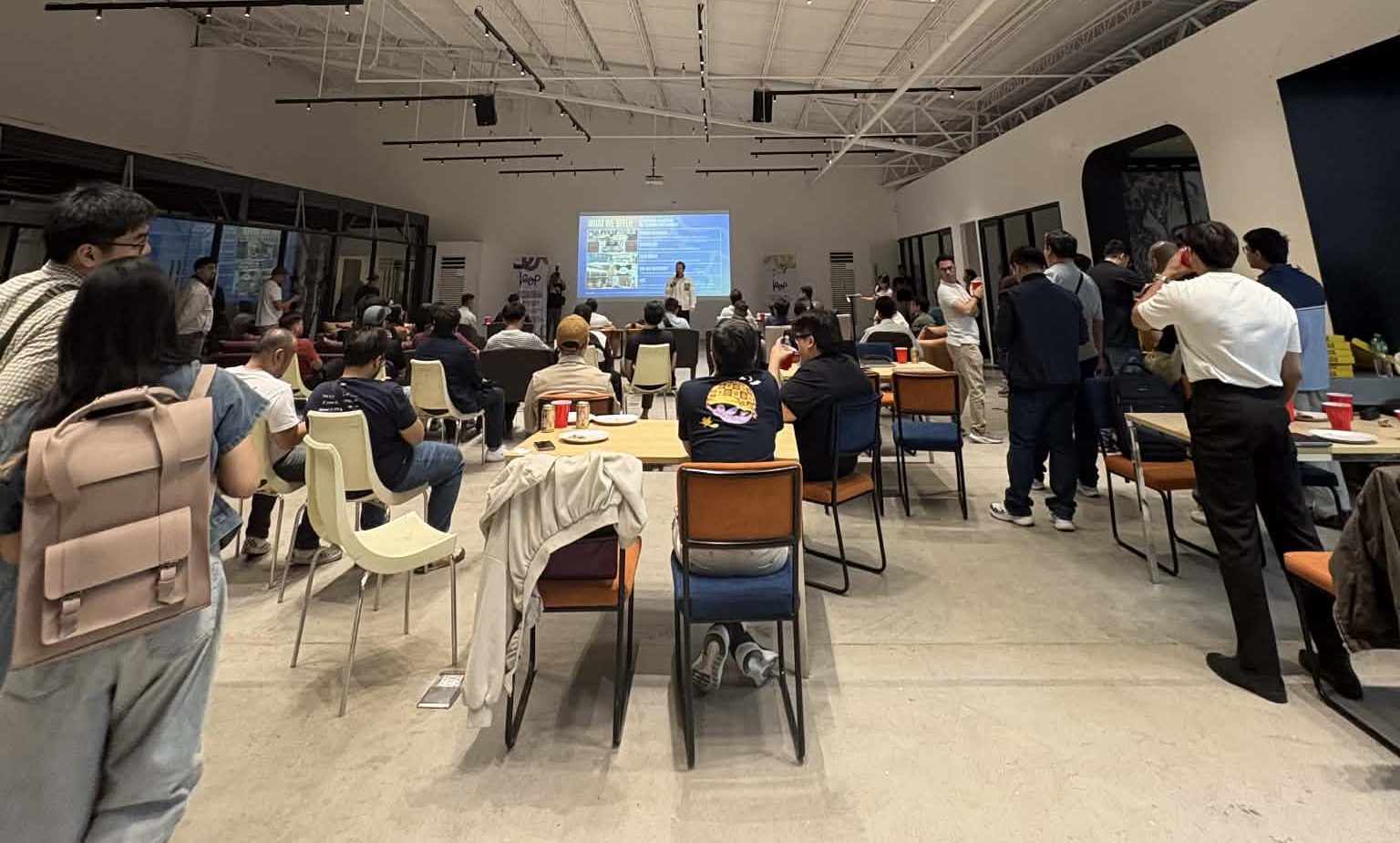
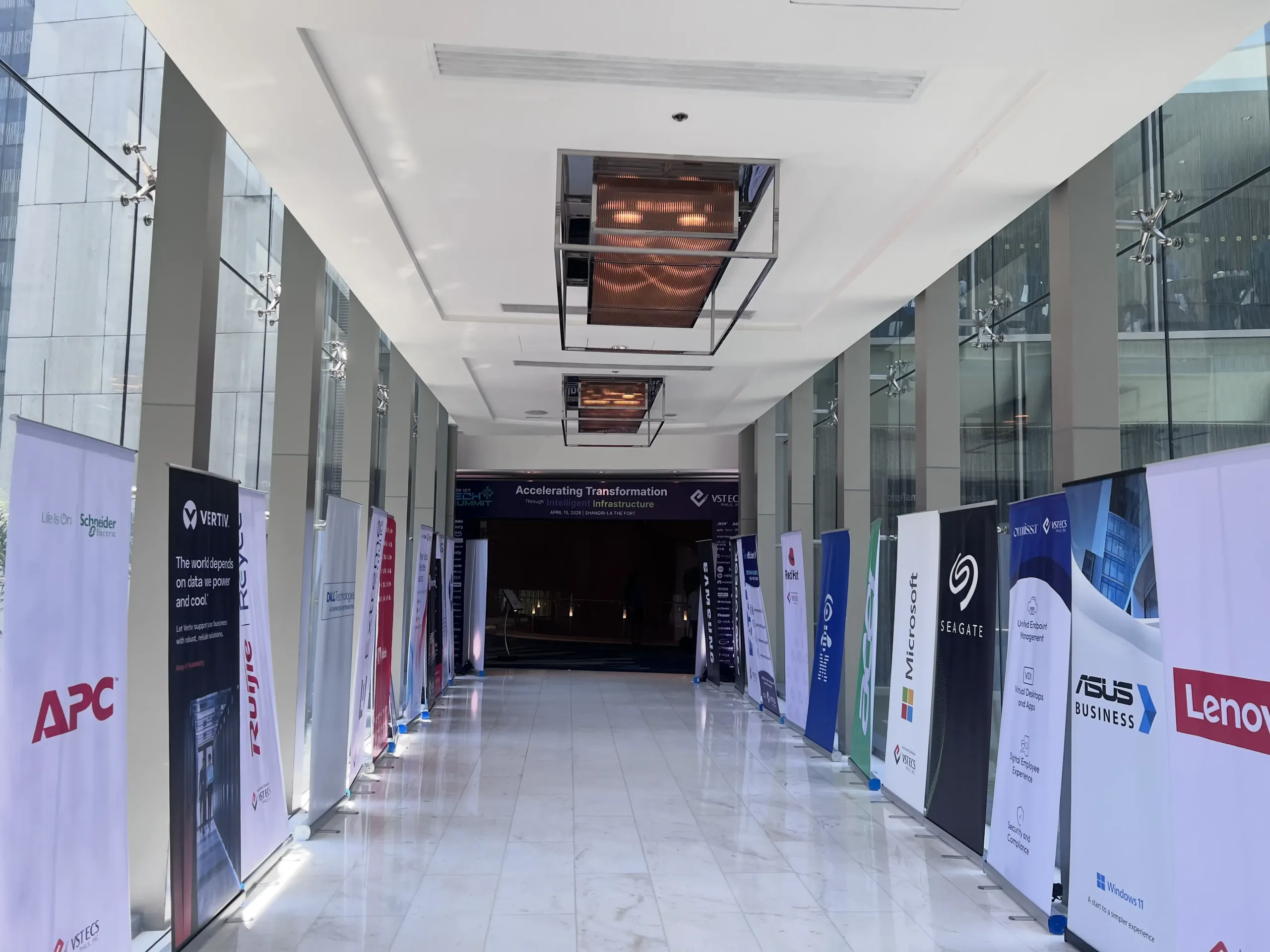
April 15, 2026 — Shangri-La The Fort – The ICT Tech Summit 2026 brought together technology leaders, enterprise practitioners, and infrastructure providers for a full-day exchange on how artificial intelligence is reshaping the foundations of modern IT. Held at Shangri-La The Fort, the summit centered on a clear message: as AI adoption accelerates, organizations must rethink infrastructure, not just to support workloads, but to enable intelligent, secure, and scalable transformation.
Across three parallel tracks, the discussions moved from foundational infrastructure to real-world AI deployment, highlighting how enterprises are transitioning from experimentation to production.
The day opened with Gian Nogales, Infrastructure as a Service Sales and Business Development Manager at Lenovo, who walked through the realities of building scalable AI platforms. His session emphasized that infrastructure readiness: compute, storage, and orchestration; remains a prerequisite for any meaningful AI initiative.
This was followed by a dual session from Hewlett Packard Enterprise, where Lem Carreon, Data Solutions Technical Specialist, discussed how private cloud AI solutions are enabling organizations to move from raw data to actionable decisions. Alongside this, Budiman Ong, Presales Consultant for SASE and Security, highlighted the growing need to secure AI-driven environments, particularly as data pipelines become more distributed and complex.
From a network and enterprise perspective, Joel Nuesca, CTO for Datacom at Huawei, provided a grounded look at AI in action, bridging the gap between emerging trends and actual business applications. The focus was less on hype and more on how organizations are operationalizing AI within existing infrastructure constraints.
Cloud-native AI development took center stage in the afternoon with David Tapang, Senior Partner Domain Specialist for Data and AI (ASEAN) at Amazon Web Services, who explored how AI agents are moving from proof-of-concept to production environments. His discussion reflected a broader shift toward agentic architectures, where systems are no longer just reactive but capable of autonomous decision-making.
Security remained a recurring theme throughout the summit. Boon Peng Lau, Area Vice President for Sales Engineering (Asia Pacific) at Menlo Security, emphasized browser-based security as a frontline defense in an era where both humans and AI agents interact with enterprise systems. Meanwhile, sessions across other tracks reinforced how cybersecurity must evolve alongside AI, particularly in addressing new forms of automated and agent-driven threats.
Infrastructure sustainability and resilience were also addressed, particularly in the session by Kiran Babu Inala, Director for Commercial and Industrial Business Development and Sustainability at Schneider Electric, who highlighted how AI workloads are driving new demands on power, cooling, and environmental efficiency. The conversation made it clear that future-ready infrastructure is not just about performance, but also long-term sustainability.
In parallel sessions, a wide range of vendors and practitioners contributed to the broader narrative of intelligent infrastructure. Kyle Herrera, Presales Consultant at Trend Micro, discussed the rise of agentic AI-driven cybercrime, while Anthony Anlap, Channel and Senior Solution Engineer (ASEAN) and Keith O’Leary, Director of Enterprise Sales (ASEAN) at Hexnode, focused on endpoint security in increasingly automated environments.
Data infrastructure and networking were also key focus areas, with Claire Huang, Country Manager at Synology, and Marlon Bardinas, Systems Engineer at Extreme Networks, discussing how organizations are modernizing storage and connectivity to support AI-driven operations. Similarly, Ed Brisenio, Senior Systems Engineer at Versa Networks, addressed the balance between secure access and cost efficiency in distributed environments.
On the applications side, sessions such as Dominic Ligot, Director for AI Ethics and Data Governance, and Christopher Alviar, SE Leader for Cloud and AI (ASEAN) at Cisco, highlighted the importance of trust, governance, and ethical frameworks in deploying AI at scale. These discussions underscored that infrastructure alone is not enough: responsible AI must be embedded into the system design itself.
End-user experience and productivity were also explored, particularly in sessions from Michael Riparip, Solutions Engineer, and Vince Espiritu, Mid-Market and Small Business Sales Manager for Philippines, Australia, and New Zealand at Zoom, demonstrating how AI is being integrated into everyday collaboration tools to enhance efficiency.
The summit closed with infrastructure and ecosystem perspectives from Ma Jovi Lynn Sapigao, Distribution Manager, and Nico Echavarria, Director of Sales Management and Country Head Philippines at Vertiv, reinforcing how partnerships across vendors, operators, and enterprises will ultimately determine how quickly organizations can scale their AI capabilities.
By the end of the day, a consistent theme had emerged: AI is no longer a standalone innovation layer: it is deeply intertwined with infrastructure. From compute and storage to security, networking, and governance, every layer of the technology stack is being redefined. The organizations that succeed will be those that treat infrastructure not as a support function, but as a strategic enabler of intelligent transformation.